Biosphere: Ecosystems at the limits of their resilience
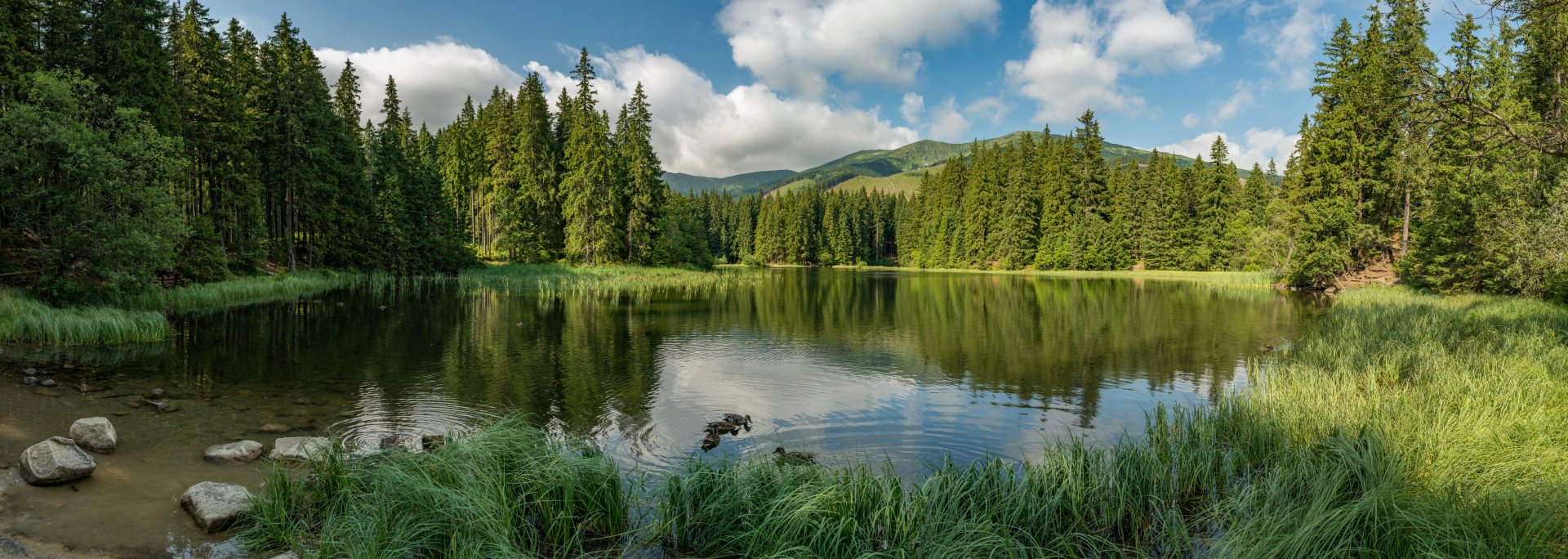
Climate change is altering living conditions for animals, plants, and microorganisms. Together with other forms of human interference in the natural environment, it is pushing entire ecosystems to the limits of their ability to survive. These ecosystems do more than reflect the changes taking place: when healthy, they can also help regulate the climate.
Bacteria, fungi, plants, and animals inhabit almost every part of the Earth, forming very different communities depending on their environment. Together with their surroundings, they form ecosystems - forests, soils, and coastal and marine environments. Ecosystems sustain the Earth’s essential cycles of matter. They recycle the basic building blocks of life: water, the fundamental basis of life; carbon and oxygen as carriers of energy; and nitrogen and phosphorus as essential nutrients. Taken together, these ecosystems make up the planet’s biosphere.
The biosphere potentially contains more tipping elements than any other part of the Earth system. Some of them are presented here. Because living organisms interact with one another and with their environment in such diverse and complex ways, identifying, describing, and predicting dynamics within the biosphere is particularly challenging. Interactions within an ecosystem can also vary considerably depending on external conditions. Yet these interactions - or perhaps precisely their complexity - help maintain stable equilibria. Researchers are working to better understand when an ecosystem is in equilibrium, when it begins to lose its resilience to external pressures, and when it may be at risk of tipping into an entirely different state. To do so, they need detailed observational data and robust models of the relationships within ecosystems.
Here, we describe several important ecosystems that are at risk of losing their stability as a result of climate change and transforming into entirely different landscapes.
Perhaps the best-known example of an ecosystem of global importance is the rainforest of the Amazon Basin in South America. Other tropical rainforests are found in Southeast Asia and in western and central Africa. Scientists currently believe that the Amazon rainforest is at the greatest risk of undergoing an abrupt transition to a completely different state as a result of climate change and human exploitation.
But why is the Amazon rainforest particularly vulnerable to suddenly shifting into a different type of landscape? One reason is that it generates a large share of its own rainfall. Vast amounts of water evaporate from the forest canopy and often fall again as rain in the same region. If the forest in a particular area is weakened, whether by deforestation or exceptional drought, evaporation from the canopy decreases. Fewer clouds form, although they would normally reflect some of the sunlight, causing the affected areas to warm further. Reduced evaporation and cloud formation also mean that forest areas downwind receive less rainfall. As a result, local disruptions to the water cycle can affect very large areas.
Deforestation is considered the main cause of declining rainfall over the Amazon rainforest. Asian rainforests are less vulnerable to the feedback between drought, reduced evaporation, and declining rainfall because they receive more moisture from the surrounding oceans. For certain regions of Central Africa, meanwhile, climate models tend to project an increase in rainfall, making the rainforest there less vulnerable to drought.
A second feedback mechanism concerns the rainforest’s susceptibility to fire. In a healthy forest, the dense canopy formed by multiple layers of vegetation retains so much moisture near the ground that there is virtually no combustible material on the forest floor. Logging, drought, and slash-and-burn clearing open up the forest. More sunlight reaches the ground and dries out the layer of dead leaves and branches. Deliberately set fires can then spread more easily. What remains is a heavily thinned and fragmented forest, or even completely cleared land. Repeated fires, often set illegally, prevent former forest areas from recovering and spread farther into the forest from its edges.
Rising global temperatures and deforestation have already meant that the Amazon rainforest can no longer fulfill its role as the “green lung of the Earth.” In recent years, there have been increasing indications that it now releases more CO₂ than it removes from the atmosphere through photosynthesis. Researchers consider around 40 percent of the forest area to be at acute risk of transitioning to open woodland or savanna within the coming decades. As a result, the affected areas could release around 30 gigatons of carbon - several times the amount of annual human caused CO₂ emissions.
Several factors interact in the Amazon rainforest: on the one hand, human-driven deforestation and slash-and-burn clearing, and on the other, climate change. Climate change is altering the dynamics of seasons and rainfall. Based on different models, researchers project that the threshold for the irreversible transformation of large parts of the rainforest could lie between 2°C and 6°C of global warming. Whether the rainforest survives, and in what state, will depend to a large extent on how governments, economic stakeholders, and consumers act now. To prevent the rainforest from tipping into a less productive state and to restore it as far as possible, CO₂ emissions must be reduced rapidly and substantially. Deforestation must also be curbed.
One of the main drivers of ongoing land conversion is the way people produce and consume food: rainforest is cleared to create cattle pasture and land for growing soy. The soy, in turn, is used as feed for pigs, poultry, and cattle. Growing consumer interest in the environmental impacts of dietary choices could lead to a positive social tipping point, after which a rapidly increasing majority of people shift toward diets containing little or no meat. Their consumption choices can in turn influence decisions by investors and major agricultural companies that may help determine the future of the Amazon rainforest.
Expanded reforestation can also help the forest recover. Within a few decades, young trees can grow back, releasing water through their leaves and gradually restoring the regional water cycle. National and international policymakers should promote a shift toward resource-efficient food production and diets, support local farmers in securing sustainable livelihoods, and advance reforestation initiatives.
Far to the north, boreal coniferous forests form a belt around the globe. They extend across large parts of Canada and Alaska, Russia, and Scandinavia. These vast forests are home to moose, bears, wolves, and wood bison. Logging and oil extraction have severely damaged boreal forests and fragmented their ecosystems. Large areas have been heavily affected by human activity.
The effects of climate change are particularly evident along the southern margins of these forests. Changes in wind patterns and moisture transport promote drought and, in turn, intense wildfires. Wildfires are fundamentally a natural mechanism of forest regeneration. In recent decades, however, fires have increased in extent and intensity and have occurred so frequently that burned areas are no longer able to recover. Following severe fires such as those that affected large areas of Siberia in 2021 and extensive parts of Canada’s forests in 2023, landscapes can remain profoundly altered. More frequent and prolonged droughts and severe storms make it harder for burned forests to recover. Climate change also frequently favors the spread of insect pests, which can readily attack weakened trees.
The loss of tree cover affects air circulation near the ground, while evaporation from the forest canopy is also lost. On the one hand, this leads to greater warming, an effect that can persist for decades. At the same time, forest dieback generally exposes surfaces that reflect more sunlight than the dark tree canopy. The greater reflectivity of these surfaces, known as albedo, has a cooling effect and counteracts warming of the ground. The forest’s natural temperature-regulating processes are thrown completely out of balance.
The various disturbances affecting the ecosystem can therefore reinforce one another or interact in complex ways. What is clear is that the forest’s capacity to regenerate has been significantly weakened, and young seedlings are unable to establish themselves under the new conditions. As a result, large areas can abruptly transition to a treeless state. Based on various models, researchers estimate that the temperature threshold for irreversible change in the southern parts of the boreal forests lies between 1.4°C and 4°C of global warming. These projections are subject to considerable uncertainty because the various effects of climate change and other human influences interact in complex ways, biogeophysical effects such as albedo and evaporation influence one another, and not all of these relationships are fully understood.
Meanwhile, along the northern edges of many boreal forest regions, the tree line is shifting northward. Trees and shrubs are spreading into the adjacent Arctic tundra, a process researchers refer to as shrubification, or the expansion of shrubs into previously treeless landscapes. The spread of woody vegetation is facilitated in some areas by thawing permafrost. The northward expansion of forests has ecological consequences of its own for species composition and the stability of natural open landscapes. It does not, however, compensate for the loss of trees in the southern parts of the boreal forests.
It is far less widely known that open landscapes such as tundra are affected by climate change in ways similar to rainforests. Yet researchers are also seeing clear signs in some of the world’s drylands and grasslands that abrupt change may be possible.
Low-rainfall drylands cover more than two-fifths of the Earth’s land surface and are home to large portions of the populations of Africa, Asia, and North America. Some are forested, others are dominated by grasslands, and some are used for agriculture. As climate change drastically alters precipitation patterns in many regions, these areas are at risk of widespread losses in soil quality and fertility and, in some cases, desertification.
In the Earth’s tropical and subtropical regions, savannas often form the natural transition between rainforest and desert: grasslands with scattered trees and distinct wet and dry seasons. Grasses and herbaceous plants dominate the vegetation, while regular natural fires promote regeneration and limit tree cover. This natural regime changes when savannas are extensively grazed and fires are deliberately suppressed as a result. Once trees and shrubs become established, they prevent fires from spreading through the extensive grasslands as they once did, thereby facilitating their own further expansion. This self-reinforcing effect can drive the landscape toward a change that may not be readily reversible: once tree cover reaches a certain level, the natural fire regime could be permanently disrupted and woodland could take over. In some regions of Africa, increasing rainfall associated with climate change may further promote the spread of trees into savannas.
Although “more forest” may sound like a good thing at first, the encroachment of woody vegetation into savannas creates a “forest in the wrong place.” A distinct, species-rich, and productive ecosystem is lost in the process. Savannas are iconic habitats for herbivores such as zebras, giraffes, elephants, and rhinoceroses; predators such as lions and leopards; and scavengers such as hyenas and vultures. Their habitat has already been severely reduced by human land use and is coming under increasing pressure from climate change. If savannas are converted into wooded areas, whether locally or across large regions, the consequences remain largely unpredictable. Soil quality and structure, water and carbon cycles, and the species composition of the original landscape would all undergo far-reaching changes. This is why, for example, reforestation projects promoted as climate protection measures need to be assessed carefully. In the past, valuable habitats have already been destroyed by planting non-native tree species in unsuitable environments.
Coral reefs are not only beautiful to look at; they are also an indispensable part of marine life. More specifically, we are looking here at reef-building stony corals found in warm coastal waters in tropical and subtropical regions of the world. These cnidarians, which are more closely related to jellyfish than their appearance might suggest, form calcium carbonate skeletons that accumulate over thousands of years to create the famous reefs. Coral reefs in the Indo-Pacific, along Australia’s east coast, and off Central America provide food for millions of people. They also protect coastlines from flooding. And not least, they are tourist attractions that can support livelihoods in many regions when managed and marketed responsibly.
Because of the extraordinary diversity of species they harbor, coral reefs are often referred to as the tropical rainforests of the sea. They serve as nurseries and feeding grounds for thousands of animal and plant species. The abundance of life in coral reefs stands in stark contrast to the nutrient-poor waters in which they thrive. Scientists are only gradually unraveling the mystery of how corals can flourish in these waters and form the foundation of such exceptionally species-rich habitats. Around one-quarter of all marine species depend on this habitat for at least part of their life cycle. The key to the corals’ success appears to lie precisely in the unique diversity of their interactions with many different organisms. Tiny algae use photosynthesis to produce energy-rich carbohydrates, which they share with the corals in exchange for protection and nutrients. Bacteria living on the corals supply their hosts with vital nitrogen compounds. Mollusks and other invertebrates such as snails and sea urchins help keep the reefs free of excessive algal growth, allowing the symbiotic microalgae to receive enough sunlight for photosynthesis. Fish feed on these animals and, in turn, become prey for larger predators such as sharks.
But the delicate balance among all these different organisms is vulnerable to disruption. Human-caused CO₂ emissions affect two key factors that determine the stability of coral-based ecosystems: the greenhouse effect is warming the oceans, while the absorption of CO₂ from the atmosphere is making seawater increasingly acidic. Warm-water corals thrive only within a temperature range of approximately 20 to 29°C. If the water becomes even slightly too warm, their symbiotic relationship with the microalgae that supply them with carbon compounds breaks down. If these conditions persist, the corals eventually die from a lack of nutrients. When reefs lose their symbiotic algae, they also lose their color, which is why this response to heat is known as coral bleaching. Increasing acidity alters the chemistry of seawater and makes it more difficult for cnidarians to build their calcium carbonate skeletons - much like the way vinegar-based cleaners dissolve limescale.
A reef takes many years to recover fully from a bleaching event. In recent decades, however, heat events have occurred at increasingly short intervals. At the same time, ocean acidity continues to increase worldwide. In addition to ocean warming and acidification, numerous local and regional factors affect the survival and recovery of coral reefs. Overfishing disrupts finely balanced food webs. Coastal construction or erosion following deforestation can wash sediment onto reefs, interfering with the corals’ energy and nutrient balance. Chemical pollution and plastic waste add further pressures and can severely damage individual organisms, species populations, or parts of the ecosystem. Taken together, these pressures can push the entire ecosystem out of balance.
Researchers are observing irreversible losses of coral reefs on local and regional scales. A reef, or a section of one, needs to retain a minimum size and level of species diversity in order to recover from a crisis. In many places, these thresholds have already been crossed. If a reef fails to recover for ten years, researchers classify the ecosystem as collapsed. Over the past 50 to 150 years, around half of the world’s warm-water coral reefs have been lost. Scientific assessments indicate that as early as 2005, around 44 percent of the remaining corals were already living under suboptimal environmental conditions. It remains unclear whether ocean warming and acidification will lead to a global tipping point for warm-water corals. Different coral species and regional ecosystems vary in their sensitivity. Based on observations to date and computer-based modeling, researchers project widespread reef loss at just 1.5°C of global warming. At 2°C of global warming, they expect the ecosystems built around warm-water corals to undergo an almost complete collapse. Given the bleaching events observed over recent decades, there are concerns that some reef regions may already have crossed their tipping point.
On the other hand, relatively little is known about the ability of different coral species to adapt to warmer temperatures. In many places, coral reefs are also under intense pressure from local factors such as pollution and overfishing. This also offers some grounds for optimism: implementing local measures to protect reefs at the political and societal level is considerably easier than reaching international agreement on global climate targets. There are also excellent examples of coral reefs being saved from destruction, for the benefit of the many animal and plant species, as well as the people, that depend on and live alongside them.
In addition to coral reefs, there are other marine and coastal ecosystems that researchers believe could shift into alternative states as a result of climate change, permanently losing diversity and ecological function in the process. These include kelp forests, which can thrive in calm, shallow, clear coastal waters throughout the world’s oceans. They, too, are affected by ocean warming and acidification. Marine storms that are becoming more intense and, in many regions, more frequent can also weaken or even destroy kelp forests. In many places, food webs are also being disrupted. As waters warm, sea urchins can thrive and graze kelp forests down extensively. Where predators of sea urchins, such as sea otters or starfish, are themselves under pressure from global warming or are hunted by humans, kelp forests often cannot recover from such intense grazing.
Seagrass meadows and mangrove forests are affected in similar ways by changes in seawater temperature, currents, and chemistry. Seagrass meadows can spread across large areas of the seafloor. They stabilize coastal sediments, store large amounts of carbon, and produce oxygen. They also provide shelter and food for a perhaps surprisingly diverse range of animals. Seahorses live here alongside mussels, snails, and shrimp, while manatees, sea turtles, rays, whales, and sharks find abundant food.
Mangrove forests occur along many tropical and subtropical coastlines. Salt-tolerant tree species thrive in the brackish waters of estuaries and bays, creating a distinctive habitat at the boundary between land and sea. These areas serve as important breeding and nursery grounds for many species of birds, reptiles, fish, and insects. With their root systems anchored in the mud of the intertidal zone, mangroves also protect coastlines from storm surges and erosion.
Alongside climate change, human alterations to natural coastal structures, land use, and water pollution are contributing to the decline of these ecosystems. Researchers are seeing regional signs of self-sustaining or abrupt change. And with every kelp forest, seagrass meadow, or mangrove forest that disappears, an important part of the global biosphere is lost. The Earth loses another carbon sink, countless plant and animal species lose their habitat, and coastal communities lose an important form of natural protection.
For the biosphere, as for other parts of the planet, the message is clear: emissions must come down. Only by reducing human-caused greenhouse gas emissions can the irreversible transformation of important components of the Earth system into less productive or even climate-damaging states still be prevented. The second essential pillar of ecosystem stability is biodiversity conservation. The tipping elements of the biosphere make particularly clear how closely climate protection and biodiversity conservation are interconnected. Only by addressing both together can we preserve the conditions for life on our planet.
Scientific review and consultation:
Prof. Dr. Josef Settele, Helmholtz Centre for Environmental Research – UFZ, Leipzig
Expertise